Censorship

Extensive studies have shown repeatedly that there is a direct and indirect relationship between discrimination and marginalization against LGBT people and major health issues especially in the areas of mental health, HIV/AIDS and access to care.

In Lebanon, while stigma and taboo provide an overall context for the marginalization of LGBT issues, including LGBT health, government and media censorship pose a direct obstacle to any efforts of promoting the health of LGBT individuals. This year, we share with you an unfortunate example of this censorship.

While TV and radio stations routinely host individuals who freely spread myths and misconceptions about homosexuality, LebMASH has been banned from appearing on several TV programs and radio shows to discuss its awareness campaigns and the reasons vary between “we don’t talk about these things out of respect to our viewers” to “these issues are taboo in Lebanon”.

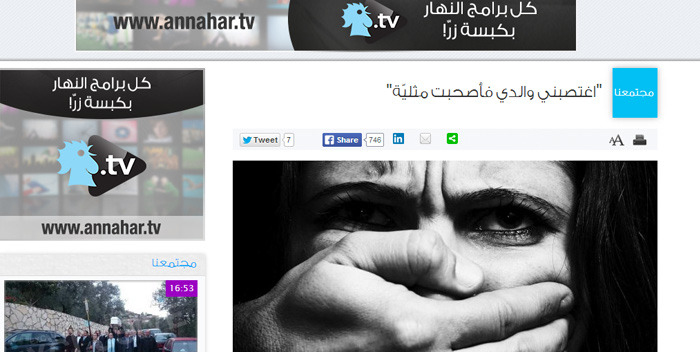
And earlier this month, despite several candidates in the recent parliamentary elections speaking publicly in support of LGBT rights, the Lebanese General Security decided, without a given reason, to ban the airing of a series of billboards that were meant to be part of a LebMASH campaign aiming at raising awareness around homosexuality not being a disease and more importantly highlighting the harmful effects of attempts to change people’s sexual orientation. The billboards were meant to display the three following messages:

– Homosexuality is not a disease
– Homosexuality is a natural state
– Attempts to convert gay people are harmful and should be banned

It’s worth mentioning that these messages are backed by science, have been endorsed by major mental health professional organizations around the world, and have been endorsed by our own Lebanese Psychiatric Society and Lebanese Psychological Association in 2013. But, due to government censorship, 72% of the Lebanese public will continue to believe erroneously that homosexuality is a mental illness, and numerous parents will continue to drag their teenage gay sons and lesbian daughters to mental health professionals so they can be subjected to various forms of harmful mental and physical practices in the futile attempt to “convert” them from gay to straight.

By Omar Fattal, MD, MPH LebMASH Executive Board Member

Transgender health guidelines: Covering the gap in knowledge among healthcare providers around transgender health

Beirut, May 10th 2017: With the support of the World Professional Association for Transgender Health (WPATH), the Lebanese Medical Association for Sexual Health (LebMASH) brought closer to the Arab speaking world the Standards of Care (SOC) for transgender and gender non-conforming individuals.

LebMASH took the initiative to translate these international health guidelines on transgender health to Arabic in order to make them accessible for both healthcare providers and transgender individuals. LebMASH believes that this translation will play an important role in starting the conversation around providing gender-affirming care to transgender individuals in Lebanon.

In collaboration with the Johns Hopkins Bloomberg School of Public health, LebMASH also conducted interviews with healthcare providers to assess their knowledge about transgender health. Additionally, interviews were done with pharmacies to assess the current prices and availability of hormone therapy provided to transgender patients during their transition. Representatives from organizations who work with the transgender community were also interviewed.

Dr. Chady Ibrahim, psychiatrist and LebMASH board member launched the press conference by defining transgender identities (individuals whose sex at birth is different than their gender identity). Dr. Ibrahim then talked briefly about the different points addressed in the Standards of Care and how different healthcare providers can use these in order to provide better care to transgender people.

Dr. Omar Harfouch, LebMASH president then talked about the lack of knowledge around transgender care among healthcare providers. Dr. Harfouch also addressed stories of discrimination, violence and attempts of murder that were facing this community.

The discussion that followed the presentations focused on the role of the media in fighting discrimination that faces transgender individuals as a gateway to providing this community with better health. Community engagement within research was also a focus of the conversation in which Dr. Harfouch insisted that LebMASH will be consulting with the transgender community about future steps in research and when educating health providers.

LebMASH thanks its volunteers, the WPATH, and all those who attended the event and support our cause. You can watch the video of the event at: https://www.facebook.com/lebmashorg/videos/1562180723794325/

Please feel free to email us with your questions or suggestions at info@lebmash.org

“Marginalization is bad for health”: A unique initiative by the Lebanese Medical Association for Sexual Health (LEBMASH)

Beirut, March 13th 2017: With the support of the Dr. Agnes Varis Trust, the Lebanese Medical Association for Sexual Health (LebMASH) launched its first LGBT health Week entitled “Marginalization is bad for your health”.

This unique initiative, taking place from March 11th till March 17th 2017, aims to raise awareness among the media, the public and health care professionals on the effects of discrimination and marginalization on the health of Lesbian, Gay, Bisexual, and Transgender (LGBT) individuals.
It consists of a variety of activities that include medical workshops and lectures targeting health care professionals and students, media appearances, and the launching of three short promotional videos.

The LGBT health week 2017 and the related promotional videos were launched at a press conference on Monday March 13th2017, at SmallVille Hotel in Badaro, Beirut, in the presence of NGOs representatives, medical professionals and members of the press.

On behalf of the Lebanese Medical Association for Sexual Health (LebMASH), Dr. Omar Fattal, co-founder and executive board member, welcomed everyone and thanked them for coming. Dr. Fattal explained the objectives of the campaign and spoke about the negative outcomes of marginalization on the health of LGBT individuals. He said that” Legal discrimination takes place through article 534 of the Lebanese Penal Code that states: Any intercourse that is against nature is punishable by up to 1 year in jail.” “This law is used to persecute and intimidate LGBT people. However, homosexuality is not against nature and homosexuality is not an illness and does not need treatment”.

Dr. Fattal also spoke about the different forms of marginalization including family rejection, bullying in schools, discrimination at the work place and within the health care system. He explained that marginalization affects three main health areas: HIV, mental health and access to health care.
Dr. Nuhad Dumit, president of the order of Nurses in Lebanon, initiated her speech by reminding everyone of the Nurses oath which “emphasizes on approaching all individuals with equal respect as nurses pledge to see patients as equal humans”.

She also declared that the order’s council has recently adopted the following statement:

“It is well documented that homophobia, stigma, marginalization, and discrimination lead to health disparities and reduced access to care. If we are to remain faithful to our profession’s mission and the public’s trust, we must take a proactive approach to addressing the health needs and safety of the Lesbian, Gay, Bisexual, and Transsexual patients. These persons are bound by experiences of stigma, discrimination, marginalization, and, specifically with respect to healthcare, a long history of discrimination and lack of awareness of health needs by health
professionals. The Order of Nurses finds it crucial to address the issue of homosexuality in Lebanon in hope of promoting better health for this vulnerable group of people”.

In conclusion Dr. Dumit applauded the various efforts of LebMASH, especially the inclusion of medical and nursing students and service providers in such initiatives which prepares to better serve LGBT people.

Nadia Badran, president of the order of social workers in Lebanon, said that “social service respects humanitarian and cultural diversity and It aims at providing better life opportunities for marginalized groups as it helps them advocate for their rights and policy change and the creation of supportive environment on a variety of levels, including public health”. Badran added that “homophobia is considered as one of the main obstacles facing individuals and professionals. These behaviors make individuals address others based on personal believes and stereotypes where people are categorized as sinners, ill or disease creators”. “The outcomes of such misconduct might prevent affected population from seeking any kind of services” she said. She concluded that “social service providers must be aware that marginalization affects the wellbeing of individuals thus affects the wellbeing of the society. Therefore lays the necessity of spreading awareness and capacity building on the level of dealing with marginalized groups in order to advocate for change”.

Nour El Kik, Policy and Advocacy Officer from the National Mental Health program at the Ministry of Public health, said she was “happy to see that mental health has been incorporated in this campaign”. She said that “the Ministry of Public Health prioritizes Mental Health and has launched the National strategy for Mental Health and Use of addictive substances 2015- 2020, that classifies LGBT individuals as marginalized groups due to their social circumstances”. EL Kik described the content of the strategy and spoke about the partnership with LebMASH in the provision of a training toolkit targeting mental health professionals and service providers enabling their capacities in dealing with LGBT care seekers. As a closure, she said that “the Ministry of Public health is keen to maintain collaboration with all parties acting for the improvement of mental health in Lebanon and the wellbeing of all citizens equally”.

At the end the audience screened the released promotional films, now available online, and there were time for press interventions before moving to the hotel lobby where attendees shared brunch.

For more information, and to view the promotional videos and event photos, please call +961 70 173782 or email: media@lebmash.org or visit: http://www.lebmash.org/healthweek.

About LebMASH The Lebanese Medical Association for Sexual Health (LebMASH) is a non-profit, non-governmental organization that was founded on September 4th 2012. In April 2014, LebMASHbecame officially registered with the Lebanese government allowing it to operate in Lebanon in full compliance with the Lebanese law. LebMASH aims at advancing sexual health for all individuals in Lebanon, with particular focus on LGBT and other marginalized populations in Lebanon.

WPATH Arabic SOC

The SOC were translated by Leen Hashem, a BA in Media Studies, MA in Gender Studies, researcher and translator. The booklet was designed by Adel Merheb, BA and MA in Graphic Design, specializing in NGO Branding and Communication. The translated document was reviewed twice by three LebMASH executive board members: Dr. Hasan Abdessamad, an Obstetrician & Gynecologist based in Seattle, USA, Dr. Omar Harfouch, MS in Public Health and Research Fellow based in Baltimore, USA, and Dr. Chadi Ibrahim, a Psychiatrist and Clinical Sexologist based in Lebanon.The Arabic translation review required a significant amount of editorial effort to remain scientifically accurate, medically relevant and culturally competent while remaining faithful to the original content of the WPATH document. An additional page was added at the end to give credits to the team mentioned here as well as to WPATH for the fund that supported this work.As agreed with WPATH in our meeting in Amsterdam in June 2016 between Dr. Abdessamad and Dr. Devor:

  1. LebMASH will publicly endorse WPATH SOC and apply it in Lebanon.
  2. The document carries both logos of WPATH and LebMASH.
  3. The document will appear on websites of both WPATH and LebMASH.
  4. LebMASH will share the results of our field study in Lebanon on transgender health status and needs and will provide National Supplementary Document to the SOC in English and Arabic once that research is finalized.
  5. Both WPATH and LebMASH will work on spreading this document in Arab speaking countries to increase its reach.

LebMASH is planning to release the Arabic SOC and the National Supplementary Document (due to be finalized mid March) in Beirut in April during a Press Conference.

LebMASH Elects its Third President Dr. Omar Harfoush

The Lebanese Medical Association for Sexual Health (LebMASH) is a not-for-profit, non-governmental organization, registered in Lebanon. LebMASH aims at advancing sexual health for all individuals in Lebanon, with particular focus on LGBT and other marginalized populations. LebMASH has seen a significant growth in the past four years from a handful of board members to a medium size organization with two full time employees, two project managers, a big network of volunteers and a diverse board including experts in LGBT health and sexual health from different health professions. This growth is well reflected in LebMASH’s brand-new website, http://www.lebmash.org, which has been rebuilt from the ground up.

In addition to providing information about LebMASH, visitors now have access to medical publications, both in Arabic and English, that include information on sexual orientation and gender identity that were published in collaboration with the American Psychological Association and answers to frequently asked questions. “We are glad to finally have an easy to use yet comprehensive website that reflects all our achievements and is useful to both health care professionals and the public” said Dr. Fattal, LebMASH’s outgoing president. LebMASH is also utilizing social media to bring important matters related to sexual health and LGBT health in Lebanon closer to the public. Through photos of volunteers and quotes on the importance of sexual health, LebMASH aims at raising awareness in a way tailored to a wide range of people.

Earlier this year, the organization had launched a video campaign that reached more than 60,000 viewers on Facebook In September 2016, LebMASH celebrated its 4th anniversary and elected its 3rd president, Dr. Omar Harfoush who will commence his duties with the new year. Dr. Harfoush is a graduate of Saint Joseph University Medical School in Beirut, Lebanon. He holds a Masters in Public Health from the Johns Hopkins Bloomberg School of Public Health with a focus on global LGBT health. He is one of the founders of LebMASH. Prior to joining LebMASH, Dr. Harfoush was closely involved in community based activist work. He served on the executive board of Helem, a Lebanese LGBT rights organization. He also was on the board of the M-Coalition, a regional initiative on improving the access of men who have sex with men (MSM) to HIV prevention in the Middle East and North Africa. In addition, he was the coordinator for computer classes at the Migrant Workers Task Force (MWTF) in Lebanon and worked on health initiatives among migrant workers in Lebanon. He brings both the commitment to the needs of the community at large while offering expertise in research methods and different LGBT health topics.

In a written statement that will be released later this year, Dr. Harfoush vowed to continue on the footsteps of the two previous presidents, Dr. Hasan Abdessamad and Dr. Omar Fattal, while continuing the expansion of LebMASH. He emphasized the importance of research and proper needs assessments in guiding LebMASH’s future work. And, he reiterated LebMASH’s commitment to prioritizing its work on improving access and knowledge about transgender care in Lebanon as well as renewing LebMASH’s engagement in confronting the negative effects of conversion therapy, a practice that alleges to change someone’s sexual orientation and gender identity but is actually futile and harmful.

You can donate to support LebMASH financially or by dedicating some of your time as a volunteer, a partner, or a board member.

Let’s Talk about Sexual Health

Article appeared in Huffington Post on Oct. 14 2016

When was the last time your doctor talked to you about your sexual health? When was the last time you asked your doctor about the quality and health of your sex life? I practice psychiatry, and although my focus is on mental health, physical health, including sexual health, is an integral part of the discussions I have with my patients. Even better, many of my patients ask me questions about their sexual health, as they consider it an integral part of their overall health and wellbeing.

In Lebanon, talking about sexual health has been muffled, if not muted, for far too long. It could be due to a lack of clear government policy or because of inconsistent funding from donors. Or it could be that political, social and economic issues have led to sexual health being forgotten altogether. Or maybe it is just the “sex” part of sexual health. After all, merely bringing up sexual health can be taboo, because it means that we have to acknowledge that sex exists.

Personally, my goal is not to break taboos or address moral issues. Nor do I want to dwell on discrimination and marginalization in Lebanon, pervasive as these can be. I am a medical doctor, looking to advance a conversation on a health issue.

As a physician, I try to take an ethical and compassionate approach based on three premises: (1) sexual health is an integral part of health and wellbeing; (2) health is a human right that should be enjoyed by everyone; and (3) my duty as medical doctor is to advocate for the right to accessible, respectful and quality healthcare services, including those services falling under sexual health services.

People have the right to health, including sexual health, regardless of their nationality, sex, ethnicity, religious background, socioeconomic status, sexual orientation or gender identity. And while this is my personal and professional opinion, by affirming the right to health and sexual health, I am not introducing a revolutionary idea. These rights have been affirmed by the United Nations for many years.(1)

My concern is that while ignoring sexual health affects everyone, it may disproportionately impact women and sexual minorities, such as lesbian, gay, bisexual and transgender (LGBT) individuals. After all, these marginalized groups and individuals targeted by discrimination already tend to suffer worse health outcomes, especially when it comes to sexually transmitted infections, HIV and mental health outcomes(2)(3)(4). They are exactly the kind of individuals whose needs must not be ignored

Concerned about the above issues, I decided to join a group of healthcare professionals from Lebanon to found the Lebanese Medical Association for Sexual Health (LebMASH) in 2012. Our goal is to advance the sexual health and wellbeing of all people in Lebanon, particularly marginalized populations. In accordance with our mission, we have worked on addressing the gaps related to the health of sexual minorities in Lebanon, including LGBT individuals. Our work over the past few years has included awareness projects, educational projects for health care professionals, promoting research on sexual health, and creating an LGBT health curriculum.

While comprehensive health promotion requires the involvement of key players, such as the policy makers, academic institutions, research centers, and the community itself, we realize that we cannot sit still, in the absence of a clear government policy for addressing the sexual health needs of the population. We have learned that, partnering with academic centers, other healthcare professional organizations, and other members of the civil society, we can take steps in a positive direction. For example, LebMASH has worked closely with the Lebanese Psychiatric Society and the Lebanese Psychological Association to issue clear position statements in May 2013, affirming that homosexuality is not a disease and does not require treatment. In 2015, we have partnered with Johns Hopkins Bloomberg School of Public Health to develop a culturally- applicable, evidence-based curriculum for medical students that focuses on sexual health and LGBT health. Over the past few years, we have worked closely with universities in Lebanon to conduct workshops and lectures with medical students and other healthcare students on the topics of sexual health, mental health and the health of sexual minorities. Earlier this year, we released an education video called “Shu el sabab” dispelling medical misconceptions about homosexuality.(5)

One can hope for a Lebanese health system that is more comprehensive, taking into consideration the needs of women and sexual minorities. That might take several years, but it is no reason to despair or feel helpless. In fact, in 2015 the Lebanese Ministry of Public Health has included LGBT people under “vulnerable groups” in their National Mental Health Strategy(6). I believe the acknowledgement of the health needs of LGBT people is significant first step towards a more inclusive public health policy.

Meanwhile, we need to start having a more honest conversation about the value of sexual health to our overall health and wellbeing. We also need to educate ourselves about how we fare in this area and on the work being done to advance sexual health in Lebanon.

There is certainly a lot to be done, but here is also a lot being done. Civil society and healthcare organizations have been taking the lead, and we will continue to work together to advocate for health rights in Lebanon. The road is long ahead and full of challenges but also potential rewards. At LebMASH, we have decided to take on these challenges and we are very excited about the future of sexual health in Lebanon. Will you join us? Let’s start by talking about sexual health.

REFERENCES:

  1. International Covenant on Economic, Social and Cultural Rights. CESCR General Comment No. 14: The Right to the Highest Attainable Standard of Health (Art. 12). Office of the Higher Commission for Human Rights. Adopted at the Twenty-second Session of the Committee on Economic, Social and Cultural Rights, on 11 August 2000 (Contained in Document E/C.12/2000/4)
  2. Schwartz, S. R., Nowak, R. G., Orazulike, I., Keshinro, B., Ake, J., Kennedy, S., & TRUST Study Group. (2015). The immediate effect of the Same-Sex Marriage Prohibition Act on stigma, discrimination, and engagement on HIV prevention and treatment services in men who have sex with men in Nigeria: analysis of prospective data from the TRUST cohort.The Lancet HIV2(7), e299-e306.
  3. Baral, S., Trapence, G., Motimedi, F., Umar, E., Iipinge, S., Dausab, F., & Beyrer, C. (2009). HIV prevalence, risks for HIV infection, and human rights among men who have sex with men (MSM) in Malawi, Namibia, and Botswana. PloS one4(3), e4997.
  4. Baral, S., Sifakis, F., Cleghorn, F., & Beyrer, C. (2007). Elevated risk for HIV infection among men who have sex with men in low-and middle-income countries 2000–2006: a systematic review.PLoS Med4(12), e339.
  5. http://www.lebmash.org/ ما-بهم-شو-السبب،-المثليّة-منّا-مرض-shu-el-sabab/
  6. Health Response Strategy, A New Approach in 2015 & Beyond, Ministry of Public Health, July 2015,http://www.moph.gov.lb/AboutUs/strategicplans/Documents/MOPH%20Health%20Response%20Strategy-2015.pdf

LPS responds publicly to statements made by one of its members on homosexuality

On May 30th 2016, the Center Catholique d’information in Lebanon held a roundtable discussion on homosexuality. Dr. Samir Jamous, a psychiatrist and a member of the Lebanese Psychiatric Society (LPS), was one of the speakers. It came to LebMASH’s attention through media reports that Dr. Jamous made some disturbing statements that are in direct contrast with the official position of the LPS. He included homosexuality under psychological disturbances and referred to homosexuality as a perversion. It was also reported that he specifically used the term shouzouz jinsi to describe homosexuality. Homosexuality is not a mental illness or a perversion.

LebMASH believes that these kind of statements, especially when articulated by a health care professional, negatively impact the work of LebMASH, LPS and other professional bodies on promoting the mental health of lesbian, gay, bisexual and transgender (LGBT) individuals. These kind of statements propagate the existing myths surrounding homosexuality and are a reflection of being misinformed on the standards of care set forth by professional organizations around the world including the World Health Organization (WHO) and the American Psychiatric Association (APA) as well as in Lebanon including the Lebanese Psychiatric Society (LPS) and the Lebanese Psychological Association (LPA); all of whom affirm that homosexuality is not a mental illness.

LPS encourgaes reporting any of its members who does not abide by the standards of care. We shared our concern with LPS and they responded. LPS took swift action and contacted the Center Catholique d’information and the Lebanese National News Association to clarify that Dr. Jamous’s intervention reflects his own personal views and is not backed by scientific data. The LPS also reminded the Center Catholique d’information and the Lebanese National News Association of their statement released in July 2013 affirming that homosexuality is not a disease and of their amendment to this statement in Nov. 2015 demanding the decriminalization of homosexuality in Lebanon. The LPS asked that these statements be published as a right to reply.

LebMASH commends the commitment of LPS to scientific standards of care and to advancing the mental health of sexual and gender minorities and for helping fight misinformation and myths that plague some discussions that surround homosexuality in Lebanon.

You can help support our work by donating, volunteering or sharing our links.

Letter to Dr. Bizri in response to his radio interview on World AIDS Day

This is a letter sent by LebMASH president on Dec. 9 2014 to Dr. Bizri in response to his radio interview on World AIDS Day.


Hello Dr. Bizri,

I just heard the interview that you gave last week with Sawt Lebnan Radio station about HIV/AIDS.

I, with a group of other physicians, founded LebMASH (the Lebanese Medical Association for Sexual Health) two years ago in Lebanon.

LebMASH’s mission is to advance the health of Lesbian, Gay, Bisexual, and Transgender (LGBT) people in Lebanon and the sexual health of all Lebanese people.
In our work we have collaborated with clinics like marsa and have been very concerned about the rise of HIV among young gay men. We are also concerned in general about poor access to care among LGBT people in Lebanon due to fear of discrimination or homophobia, both of which are unfortunately rampant among our health care providers.

It gives me so much hope to know that there are people like you and Dr. Nesrine Rizk who are approaching the issue of HIV/AIDS with such integrity and based on science.

I also couldnt have agreed more with every word you said regarding the need to update our antiquated 534 penal code. Even though article 534 technically does not apply to homosexuality since it punishes any sexual intercourse that is against nature and homosexuality is not a disease and is not against nature. We all know that the police in Lebanon continue to harass and arrest men based on the suspicion of being gay.

Knowing how hard it is to change laws in Lebanon, we and other organizations have realized that a good alternative to the ultimate goal of abolishing article 534, would be to deactivate it by educating the public in general and the legal community specifically that this law is not relevant to homosexuality.

Religion and the conservative cultural environment continue to pose a significant challenge in Lebanon and it was very interesting what you said about religious leaders who might be sympathetic. This also gives us great hope especially that some people in Lebanon do have a tendency to become religious when the issue of homosexuality is brought up but somehow they dont mind numerous other issues that are not allowed by religion such as stealing, drinking alcohol, and eating pork.

Thank you again for this great interview and for all the work that you have been doing to take care of people living with HIV/AIDS and to promote awareness and understating of this disease.

All the best,
Dr. Omar Fattal
President, LebMASH

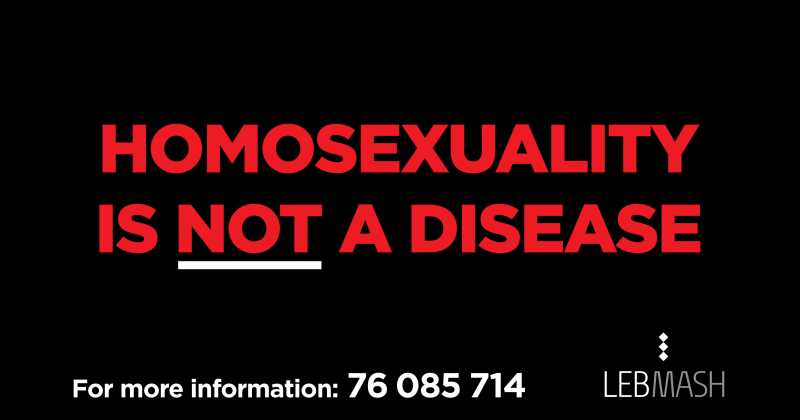
In response to an article published by Annahar on Nov. 15, 2014 and titled My father raped me, so I became a homosexual

In Nov. 2014, the Lebanese Medical Association for Sexual Health sent a letter to the editor in response to an article published by Annahar on Nov. 15, 2014 and titled My father raped me, so I became a homosexual

Dear Madame/Sir

My name is Hossam Mahmoud. I am a psychiatrist and a board member of the Lebanese Medical Association for Sexual Health (LebMASH), which was founded over two years ago with the aim of advancing sexual health for all people in Lebanon, particularly LGBT people. I am writing to you with concern, and honestly, disappointment, after reading the piece اغتصبني والدي فأصحبت مثليّة by Ms Viviane Akiki that appeared on Annahar website on November 15, 2014. As an Association for Sexual Health, we are concerned about several aspects of the article:

1- The article insinuates that being raped as a child is linked to becoming homosexual as an adult. The article even consults with Ms Farah Moukaddam for an “expert opinion” to support this argument. Unfortunately, the linkage between homosexuality and sexual abuse as a child is inaccurate and misleading. There is no scientific evidence linking sexual abuse with homosexuality. Research has not been able to discover the origins of homosexuality or of heterosexuality, for that matter. Similar to left-handedness and other human attributes, homosexuality is likely manifested due to a mixture of genetic, biological, and environmental factors.

2- The article seems to imply that homosexuality is a reaction to a trauma, and that homosexuality itself is an illness caused by such trauma. Responsible journalism would require attempting to get a second opinion or an alternate narrative to homosexuality, and sexuality at large. We are attaching with this letter the position statement of the Lebanese Psychological Association regarding homosexuality. It clearly states that homosexuality is neither a mental nor psychological disease in itself, and therefore, requires no treatment. LebMASH fully supports and endorses the position of the Lebanese Psychological Association regarding homosexuality.

3- The article fails to provide resources for survivors of rape and incest to seek help and support for the actual results of such trauma. Such consequences include post-traumatic stress disorder, anxiety, depression and physical conditions.

We would like to emphasize that we regard Annahar Newspaper with a lot of respect, which is why we are concerned about such an article appearing in your newspaper. We hope that future articles at Annahar would aim to conduct more scientific research when it comes to issues of trauma, sexual health and mental health, in order to avoid exacerbating current myths and misconceptions that are widespread among the public. The board members of LebMASH, including myself, would be happy to make ourselves available to answer any scientific questions regarding this article or future articles.

Sincerely,

Hossam Mahmoud, MD MPH
LebMASH

Third Lebanese Medical Group to Denounce Conversion Therapy

The Lebanese Psychological Association (LPA) has just announced today that “homosexuality is not a mental illness and thus requires no treatment”. This comes one week after the Lebanese Psychiatric Society (LPS) released a similar statement and 2 month after our position statement on Sexual Orientation Change Efforts (SOCE) or what is referred to as “conversion or reparative therapy”.
LPA strongly urges the media to verify the credentials of guests hosted to talk about psychology especially that this field is not very well controlled in Lebanon suggesting that some individuals might pretend to hold credentials they don’t have. This could be a reference to recent appearance of “psychologist” on OTV whose arguments about homosexuality were not scientifically accurate.
LebMASH commends LPA for releasing such an essential and over due position statement. This truly reflects LPA’s commitment to equality in healthcare, evidence-base medicine and prejudice-free practice.