LebMASH: Persecution and marginalization of LGBT people have serious consequences on health

On this International Day Against Homophobia and Transphobia, the Lebanese Medical Association for Sexual Health (LebMASH) would like to take the opportunity to remind government officials, Lebanese police and security forces, policy makers, health care professionals, and the public in general that persecution and marginalization of Lesbian, Gay, Bisexual, and Transgender (LGBT) people and other minorities have serious and detrimental direct and indirect consequences on health.

Lebanon appeal: LGBT sexuality isn’t ‘against nature’

An appeal for an end to persecution and marginalization of LGBT people in Lebanon comes with a useful twist:

It argues that because “homosexuality is a natural variation of human sexuality,” it therefore should be exempt from Lebanon’s law against sexual intercourse “against nature.”  The wording “against nature” is a common euphemism that many nations have used to make same-sex intimacy a criminal offense.

Statement from the Lebanese Psychiatric Society (LPS)

To whom it may concern

We have been reading lately in newspapers about arrests and abuse of homosexuals in Lebanon. We also became aware of some positions taken by professionals regarding homosexuals and ways to treat them psychologically.
The Lebanese Psychiatric Society would like to state its position regarding homosexuality.
Homosexuality was once thought to be the result of troubled family dynamics or faulty psychological development. Those assumptions are now understood to have been based on misinformation and prejudice. Currently there is a renewed interest in searching for biological etiologies for homosexuality. However, to date there are no replicated scientific studies supporting specific biological etiology for homosexuality. Similarly, no specific psychosocial or family dynamic cause for homosexuality has been identified, including histories of childhood sexual abuse.

Homosexuality per se implies no impairment in judgment, stability, reliability, or general social or vocational capabilities. In addition, all major professional mental health organizations have gone on record to affirm that homosexuality is not a mental disorder. In 1973 the American Psychiatric Association’s Board of Trustees removed homosexuality from its official diagnostic manual, The Diagnostic and Statistical Manual of Mental Disorders, Second Edition (DSM II). The action was taken following a review of the scientific literature and consultation with experts in the field. The experts found that homosexuality does not meet the criteria to be considered a mental illness.

The following year, the American Psychological Association declassified homosexuality as an illness. Since then, every major medical and mental health organization has come to embrace this view. The World Health Organization (WHO) declassified homosexuality in 1990. WHO states: “In none of its individual manifestations does homosexuality constitute a disorder or an illness and therefore it requires no cure.” Therefore, homosexuality per se requires no treatment.

In fact, there is no published scientific evidence supporting the efficacy of “reparative therapy” as a treatment to change one’s sexual orientation. More importantly, altering sexual orientation is not an appropriate goal of psychiatric treatment. Some may seek conversion to heterosexuality because of the difficulties that they encounter as a member of a stigmatized group. Clinical experience indicates that those who have integrated their sexual orientation into a positive sense of self-function at a healthier psychological level than those who have not.

A position statement adopted by the American Psychiatric Association’s Board in December 1998 said:
The American Psychiatric Association opposes any psychiatric treatment, such as “reparative” or “conversion” therapy, which is based upon the assumption that homosexuality per se is a mental disorder, or based upon a prior assumption that the patient should change his/ her homosexual orientation.”
We urge mental health professionals in Lebanon to rely solely on science whenever they express opinion or provide treatment.

The LPS Executive Committee July 2013
Addendum – November 2015
The Lebanese Psychiatric Society would like to state its position regarding the legislation concerning homosexuality and demands that the article 534 of the Lebanese penal code that prosecute homosexual activities be abolished.
The LPS Executive Committee

Link to the original document

LebMASH, USJ, and Hotel-Dieu Talk Sexual Health

In collaboration with the Department of Psychiatry at Hôtel-Dieu de France Hospital and Saint Joseph University (USJ), LebMASH delivered a half-day educational activity addressing health of sexual minorities as part of the “matinées scientifiques” on March 26 2016.The topics covered dealing with LGBT individuals in a clinical setting, lesbian health, LGBT mental health and general social challenges faced by the LGBT community in Lebanon. This activity was organized by Dr. Sami Richa and the Hotel-Dieu scientific committee.

LebMASH’s response to granting a transman the right to change his sex on legal documents

An original decision by the Lebanese court had denied a transgender man (born with female genitalia but identifies with male gender) the right to change their sex on their legal documents. Following this decision, the Court of Appeal in Lebanon represented by judge Jeanette Hanna reinstated this right considering that it is linked to three main human rights that cannot be violated: the right to a better health (by alleviating the suffering of this man), the right to seek care and finally the right to privacy (1).

The Lebanese Medical Association for Sexual Health (LebMASH) views this ruling as a positive step towards better recognition of transgender community’s rights in our society, addressing their health needs and advancing their health status. There is an ample amount of work ahead of us to fight stigma, educate healthcare providers, regulate private surgeries and investigate abuse cases and hold perpetuators accountable.

Transgender individuals are individuals whose gender identity (man or woman) conflicts with their sex assigned at birth (2) (male or female). Transsexuals are individuals who seek sex-reassignment surgery (2). Not all transgender individuals seek sex reassignment surgery(3) since some prefer hormonal therapy while others just reaffirm their gender without any additional treatment.

Although no data exists on the transgender population in Lebanon, studies in other countries show that this population is at an extremely higher risk for HIV (4) and suicide (5) among other mental health outcomes. All of this has been linked to the stigma that society enforces on these communities (4 and 5). Not having legal documents that align with their current gender identity had been associated with being denied care in many other countries as well as the fear of these populations to seek care (6, 7 and 8).

LebMASH would like to stress the following:

  1. Any transgender citizen should have the right to change their sex on official documents to affirm their gender. The ruling should not be limited to post-operative transgender individuals.
  2. Allowing transgender individuals to correct their sex on official documents removes only one of many barriers to competent and dignified healthcare that all citizens deserve. The medical community in Lebanon should work on advancing their knowledge on the topic to build competence in delivering care to this population. Transgender health should be included in medical school curricula, in residency programs, in budgets allocated for research and in medical conferences around the country.
  3. To advance the health outcomes of any population, societal stigma should be alleviated. This is a role the media can play in approaching the topic of gender identity in a scientific and well-researched manner. Civil Society Organizations can also play a role in raising awareness about the topic.
  4. To advance the health outcomes of any population, legal protections should be instated to prevent and punish verbal, physical, emotional and sexual abuses that individuals might be exposed to. This is a role the government and police authorities can play by awareness campaigns among their employees.

References:

  1. ايفا الشوفي- محكمة الاستئناف تؤكد جق الفرد في تغيير جنسه مقال صادر في جريدة الأخبار يوم 13-1-2-16
  2. Johnson CA. Off the map: how HIV/AIDS programming is failing same sex practicing people in Africa. New York: International Gay and Lesbian Human Rights Commission, 2007. http://www.iglhrc. org/cgi-bin/iowa/article/publications/reportsandpublications/4. html (accessed Nov 28, 2012).
  3. Carroll, L., Gilroy, P. J., & Ryan, J. (2002). Counseling transgendered, transsexual, and gender‐variant clients.Journal of Counseling & Development, 80(2), 131-139.
  4. Baral, S. D., Poteat, T., Strömdahl, S., Wirtz, A. L., Guadamuz, T. E., & Beyrer, C. (2013). Worldwide burden of HIV in transgender women: a systematic review and meta-analysis.The Lancet infectious diseases, 13(3), 214-222.
  5. Haas, A. P., Eliason, M., Mays, V. M., Mathy, R. M., Cochran, S. D., DAugelli, A. R., & Russell, S. T. (2010). Suicide and suicide risk in lesbian, gay, bisexual, and transgender populations: review and recommendations.Journal of homosexuality,58(1), 10-51.
  6. Baral, S., Beyrer, C., & Poteat, T. (2011, July). Human rights, the law, and HIV among transgender people. InThird Meeting of the Technical Advisory Group of the Global Commission on HIV and the Law.
  7. Law, G.C.o.H.a.t., (2011), Selected Submissions from the Global Commission on HIV & the Law – Asia-Pacific, Caribbean, Eastern Europe & Central Asia and Latin America, in Regional Dialogues, U.H.A. Practice, UNDP: Port of Spain, Trinidad.
  8. Riascos-Sanchez, V.P., et al., (2008), ID cards that reflect gender identity can play role in reducing vulnerability of transgender sex workers (MOAD0305), in XVII International AIDS Conference, IAS: Mexico City.

Animated short tackles Lebanese misconceptions of homosexuality

In Lebanon, as well as in many places around the world, a social stigma exists surrounding homosexuality.

This stigma leads to numerous misconceptions, misinformation and general misunderstandings. Although the Lebanese Psychiatric Society released an official statement in 2013 saying that,”Homosexuality is not a mental disorder and does not need to be treated,” many Lebanese still view it as a curable disease.

NYC Hosts LebMASH’s 3 rd Annual Fundraiser

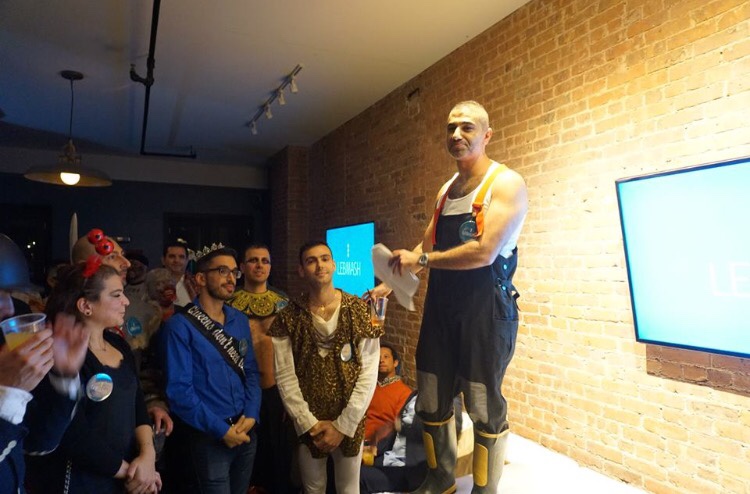
LebMASH had its third Halloween party and fundraiser in New York City on Friday Oct 30, 2015 at Loft 20. More than 150 people attended the event, some travelling in from Cleveland, SF, Miami, Charleston, Philadelphia, and even Kuwait to attend. Everyone enjoyed Lebanese heavy appetizers, music and a live performance by Sultana. The event was organized by Nizar Ouf and was hosted by LebMASH board members: Omar Harfoush, Hossam Mahmoud, Rami Baz, Lama Bazzi, Omar Fattal, and Hasan Abdessamad. The event raised $16,700. LebMASH would like to thank everyone who supported this event by attending or making a donation and all those who made this event possible especially the organizer Nizar as well as Ziad and Elias who donated the food and supplies and our volunteer Deena.

Women are also at risk of HIV in Lebanon

Kirsty Clark, a Masters of Public Health candidate at the Yale School of Public Health, spent May July 2015 in Beirut, Lebanon conducting research on how sexual stigma against women in Lebanon influences sexual healthcare. Kirsty conducted 21 interviews with NGO workers and physicians in the field of sexual health.

Here is the abstract of the study, the full publication is in press:

Research and reporting surrounding women’s sexual health in Lebanon is scarce. There is currently no reliable data on rates of sexually transmitted infections (STIs), level of sexual health knowledge, or information regarding access points of sexual health care among women. Using individual semi-structured qualitative interviews, investigators conducted formative research to gain a deeper understanding of sexual health among women in Lebanon. Using multiple purposive and snowball sampling strategies, 21 key informants were recruited from a number of regions in Lebanon. 11 of the key informants are physicians (OBGYNs and Infectious Disease) and 9 are staff (non-physicians) at STI/HIV Voluntary Testing and Counseling (VCT) centers. Findings suggest that sexual stigma against women acts insidiously at each level of the social-ecological model (internalized, relationship with healthcare providers, community/family, and societal) to inhibit women’s knowledge and access surrounding sexual health care. Findings can be utilized to inform sexual health interventions and as foundation for further research.

For the full article, click here.

Crowdsourcing Saves Student Scholarship

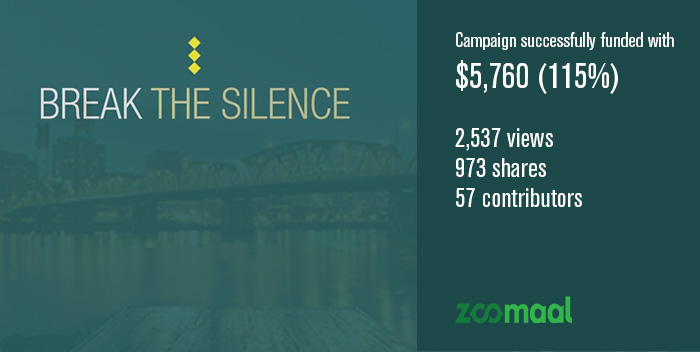
Our Zoomaal Campaign that ran from Sept. 1st till Nov. 2nd, 2015 just ended raising $5,760 and achieving 115% of our set goal. In content and add title Crowdsourcing saves student scholarship. The campaign received 2277 views, 962 shares and was backed by 57 contributors divided as follows:

  • 28 from USA raising $3,685
  • 13 from Lebanon raising $1420
  • 9 from Canada raising $380
  • 7 from Bahamas, Netherlands, UK, Greece, and UAE